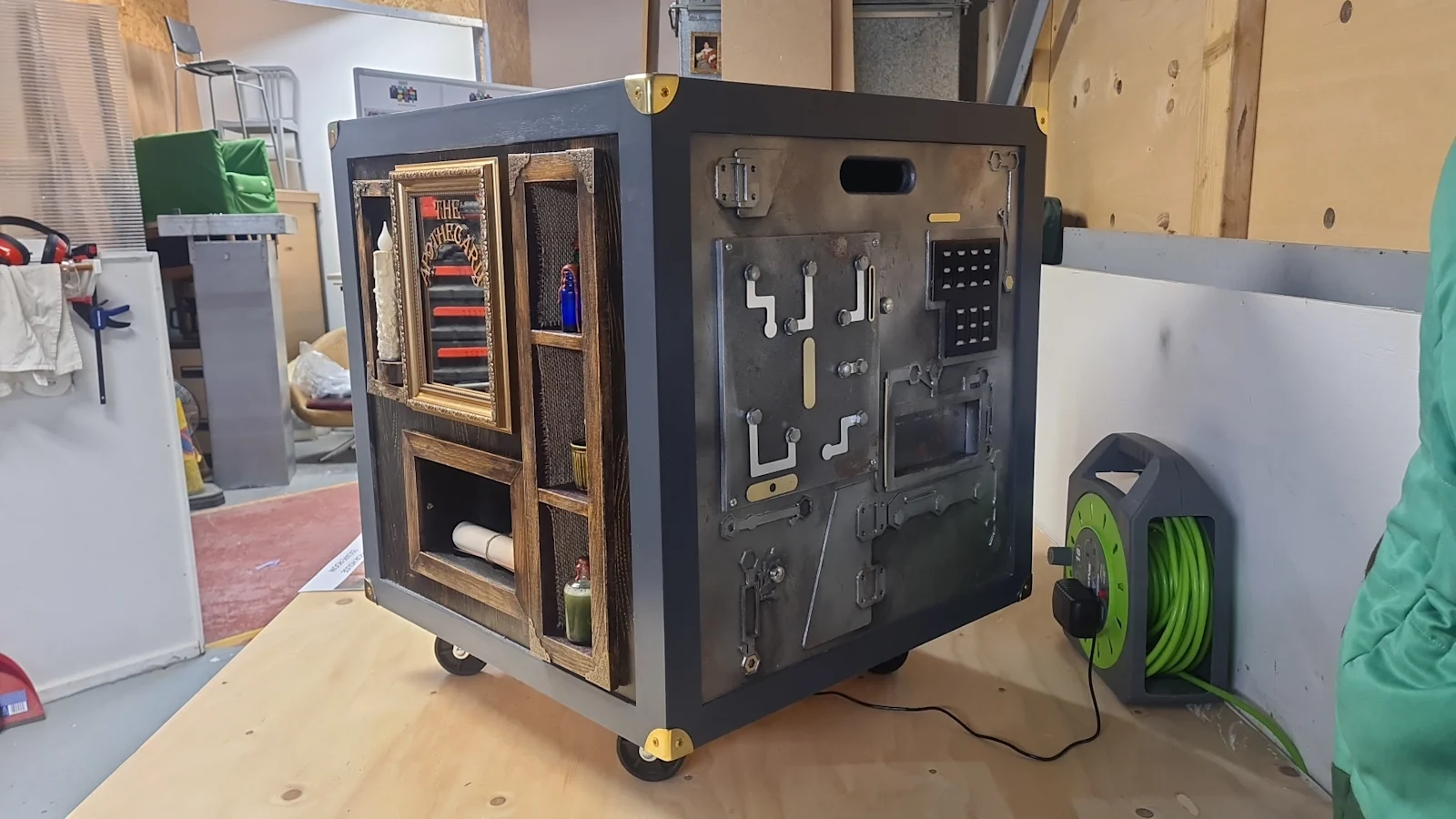
Puzzle design is where a lot of rooms quietly lose money. Something might look clever in a planning document, but if it stalls the whole group for 15 minutes, the mood drops fast. That’s when reviews start mentioning confusion instead of challenge. Good design keeps players moving. Different people can work on different things. There’s always momentum.
Then there’s durability. It’s not glamorous, but it’s critical. Players will pull harder than you expect. They’ll force drawers, twist handles, press everything repeatedly. If it looks like it opens, they’ll try. So you build with that in mind — reinforced internals, protected electronics, parts you can swap quickly. Every breakdown costs you bookings.
Immersion doesn’t automatically mean a £50k budget. We’ve seen sub-£10k builds outperform more expensive rooms simply because they were cohesive. The lighting was right. The story made sense. Nothing felt like an afterthought. Immersion is consistency. One modern switch plate in a Victorian study is enough to break it.
The difference between £5,000 and £50,000 really comes down to ambition and scale. £5k is sensible if you’re testing a concept or adding a short-format game to an existing attraction. £50k makes sense if you’re creating a flagship room designed to carry a venue. The number itself isn’t the point — the return is.
Reset time is another hidden cost. If it takes 20 minutes to get the room ready again, that’s fewer sessions per day. Multiply that across a year and it adds up. Good design doesn’t just think about the player experience; it thinks about what happens when the door closes behind them.
Trends will come and go. Horror will spike. A viral concept will get copied everywhere. Then it fades. The rooms that last are built on solid mechanics and clear storytelling, not gimmicks. The eight-year room we mentioned earlier wasn’t flashy. It just worked — and it still does.
If you’re planning to build, the question isn’t just “How much will it cost?” It’s “What is this room meant to achieve?” Once you’re clear on that, the budget becomes a strategic decision, not a guessing game.